
A story that began under a tree
In 2009, on the edge of Kileleoni Hill, families gathered for a meeting under a tree. Grass was disappearing, livelihoods were under pressure, and wildlife brought little value to the community. The land had reached a tipping point. Together, they imagined a different future — one where healthy land, cattle, people, and wildlife could thrive side by side. From that vision, Enonkishu Conservancy was born.
TIME LINE
2009 -Founded under a tree
Representatives from 300 families owning 24,000 acres bordering what would become Naretoi gathered over nyama choma and open conversation, Enonkishu was born.
2009 - 11 - [Hard lesson]
18,000 acres of wild lost before land rent was secured.
It took two years to secure funding. In that time, 250 families left the plan for cultivation, forests that sheltered elephants turned to charcoal and maize farms. A defining lesson: without paying landowners promptly, conservation cannot compete with cultivation.
2011 - 13 - First grants, first partnerships, Naretoi takes shape
We became a member of the Global Savory Hub Network, received a WWF ranger motorbike grant, MaMaSe became a pilot partner, we received our long-awaited approvals for Naretoi (conditional on Enonkishu's formal establishment as a protected buffer.)
2013 - 14 - One collective herd - the breakthrough
The community agreed to merge their cattle into a single, collectively managed herd under a holistic grazing plan. We secured a $700,000 Africa Enterprise Challenge Fund grant (backed by the Gates Foundation) to formally lease the land for 3 years and funded the Sustainable Rangeland Management program. The infrastructure of a lasting model was finally in place.
2016 -17 - Drought proves the model
Enonkishu's community lost no livestock in the 2016–17 drought. Neighbouring areas without managed grazing lost close to half their herds. The grass cover, water retention and collective management held. Wildlife also began to return. Collection in the Wild began hosting guests.
2020 - [Hard lesson]: Covid - and why the Naretoi model held
Kenya's borders closed. International guests stopped coming. Conservation fees - dependent on tourism across most of the ecosystem; collapsed. Many conservancies struggled to survive. Enonkishu did not. Naretoi's homeowner model; annual payments made regardless of whether guests were present, continued to fund the conservancy through the pandemic. It was proof of something important: a conservation model anchored in different revenue streams, not just occupancy, is genuinely resilient.
2022 - 24 - Recovery and three strong years
As travel returned, so did the momentum. Tourism recovered, Collection in the Wild conservation fees grew, and 2022 to 2024 were among the best years Enonkishu has seen, in occupancy, in ecological monitoring data, and in community engagement. Bare ground was now down to 20%. Springs have returned. Mara Predator Project stated Enonkishu had the highest abundance of lions in the Northern Mara.
2024 -25 Mbokishi Conservancy - neighbours choose conservation
In one of the most encouraging developments in Enonkishu's history, neighbouring landowners from Mbokishi spent months taking down fences and adding their land to conservation — voluntarily expanding the wildlife habitat and the ecosystem's reach. It is exactly what this model was built to inspire.

The start of the dream - 2009
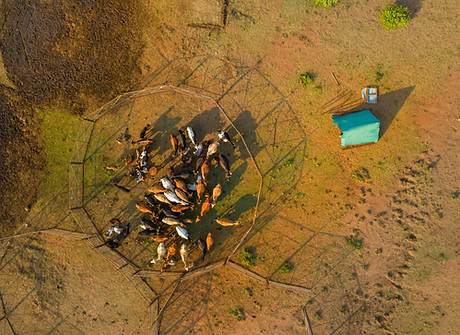
Predator Proof Bomas - 2013

The Rangers Team -2013

Restoring land takes time, patience, and persistence. There are setbacks along the way, but when grass grows, and wildlife returns, the land tells its own story.
Lawrence Mbelati
Looking forward with hope...
"Enonkishu is still evolving. The threat of cultivation never goes away in one of Kenya's most fertile zones. Landowners have real alternatives, and they remind us of that regularly. Conservation must remain the most compelling choice — economically, socially and ecologically.
What gives us hope is not the absence of difficulty. It is that neighbours are choosing to join. That the land is recovering faster than expected. That a pandemic tested the model and the model held. That a group of families who gathered under a tree in 2009 are still here, still committed, still watching the grass grow back.
That is enough to keep going. And we believe the best is still ahead."
Dickson Ole Kaelo
Chairman of the Kenya Wildlife and Conservancies Association

BE A PART OF IT
Get involved
Keep up with conservancy fee payments - they are the foundation everything rests on.
Encourage guests at your properties to pay full fees. Every guest night is a direct act of conservation.
Help with fundraising - events, proposals, pitches. An auction. An endowment fund. We are open to all ideas.
Come and see it. Nothing replaces standing on the land and understanding what is at stake - and what is possible.