
HERDS FOR GROWTH
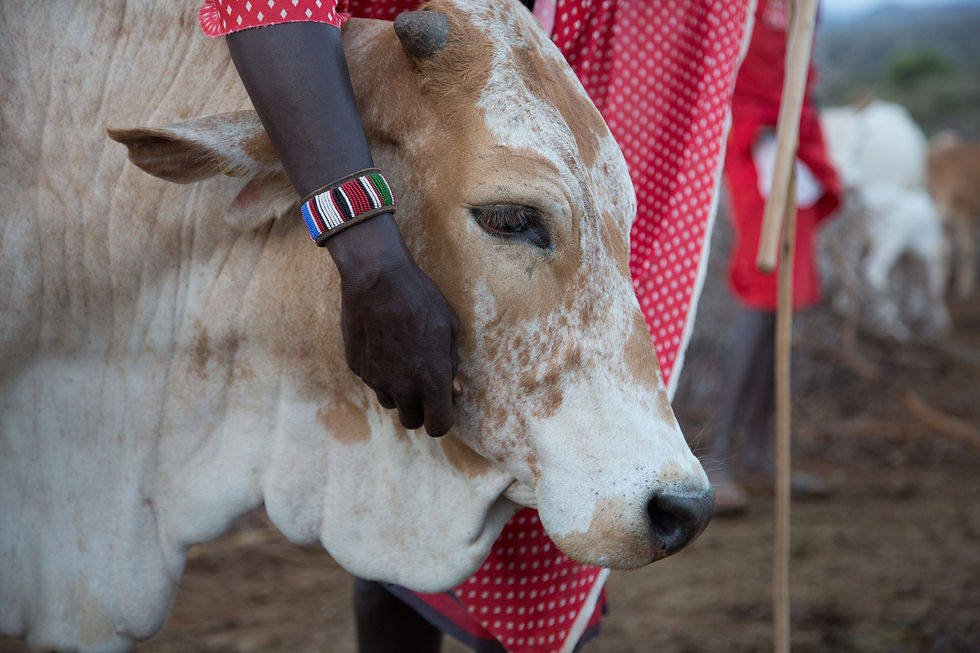
One herd. One plan. One future.
One collective herd, managed together, improving livelihoods and restoring the rangeland.
Herds for Growth is Enonkishu’s regenerative grazing programme, built around the idea that well-managed livestock can help restore land rather than degrade it. By carefully planning grazing movements, timing, and herd density, cattle are used to mimic the natural movement of wild herbivores; allowing grasslands time to recover, improving soil health, increasing biodiversity, and strengthening drought resilience.
The programme also creates direct value for local communities, supporting better livestock productivity, healthier rangelands, and long-term income linked to conservation.
EMBRACING LIVESTOCK
The consolidation of the community livestock into a single, collectively managed herd was a profound breakthrough; and a demonstration of the social trust Enonkishu has built over years.
Managing one herd means applying a single, coherent grazing plan across the conservancy, dramatically improving outcomes for the land and the livestock alike.
Cattle are tracked and monitored daily. Their movement across the conservancy follows the grazing plan, rotating through blocks to allow recovery and prevent overgrazing.
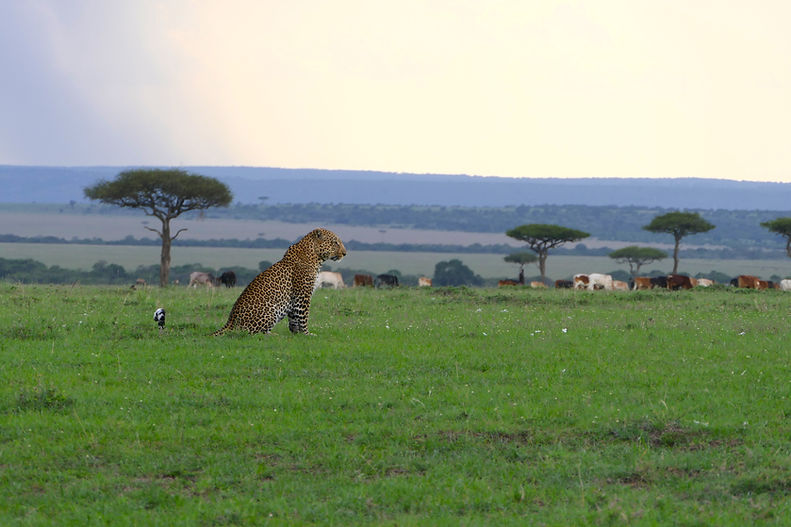
In times of drought, the collective model gives the community the ability to protect cattle and wildlife together.

"Through holistic management, Enonkishu intends to improve the productivity of livestock in the region, improve livelihoods and maintain Maasai heritage, whilst protecting wildlife."
Newton Koriata
BREEDING & QUALITY
Enonkishu introduced Boran bulls into the communal herd with a deliberate focus: quality over quantity. Better genetics improve the health, weight and value of each animal, diversifying revenue and demonstrating that conservation and commercial livestock management are not in competition.
PREDATOR PROTECTION
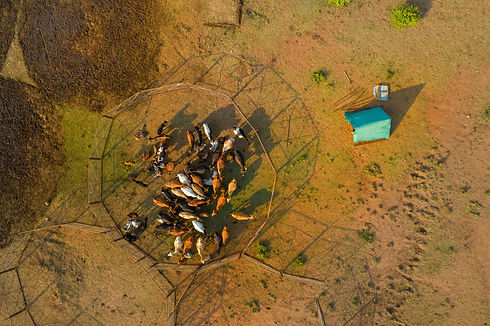
Mobile, predator-proof bomas protect cattle at night. Fitted with Lion Lights — solar-powered flashing lights that deter big cats — they move with the herd across the grazing plan. The result: dramatically fewer livestock attacks and fewer retaliatory killings of lions.
THE GRAZING COMMITTEE
A community grazing committee meets to determine the carrying capacity of each block and set the number of livestock animal units permitted per block per period. Decisions account for the growing season, available forage, drought risk and the needs of wildlife. This is community-led stewardship backed by evidence.
REGENERATIVE GRAZING
Cattle move across defined blocks of the conservancy according to the plan, with rest periods long enough for grasses to recover and root systems to deepen. The mobile boma moves with the herd. Areas not yet grazed are monitored alongside grazed areas.
WHEN CATTLE THRIVE, COMMUNITIES THRIVE
Improved livestock productivity adds directly to household income. Conservancy fees from tourism complement this, creating multiple revenue streams for families. Community members also receive health insurance funded through conservancy earnings — a concrete expression of the model's principle that protecting the wild is inseparable from protecting people.
LIVESTOCK AS A WAY OF LIFE
For the Maasai, livestock are far more than animals - they are culture, identity, livelihood, and a way of life passed down through generations. At Enonkishu, we believe wildlife and livestock do not have to compete. When managed well, pastoralism can work in harmony with nature, restoring grasslands, supporting communities, and creating healthy landscapes where both cattle and wildlife thrive together.
-
Mobile bomas are moved with the herd, concentrating dung in one place before the cattle move on — enriching the soil where they rest.
-
Additional water points were established across the conservancy to allow more even grazing pressure and draw cattle away from overgrazed areas.
-
Erosion control interventions stabilise degraded ground, giving recovering grass the best chance to establish root systems.
-
Drought response is built into the plan: when rain fails, the conservancy has the forage reserves and collective management capacity to support both community cattle and wildlife through the dry period.